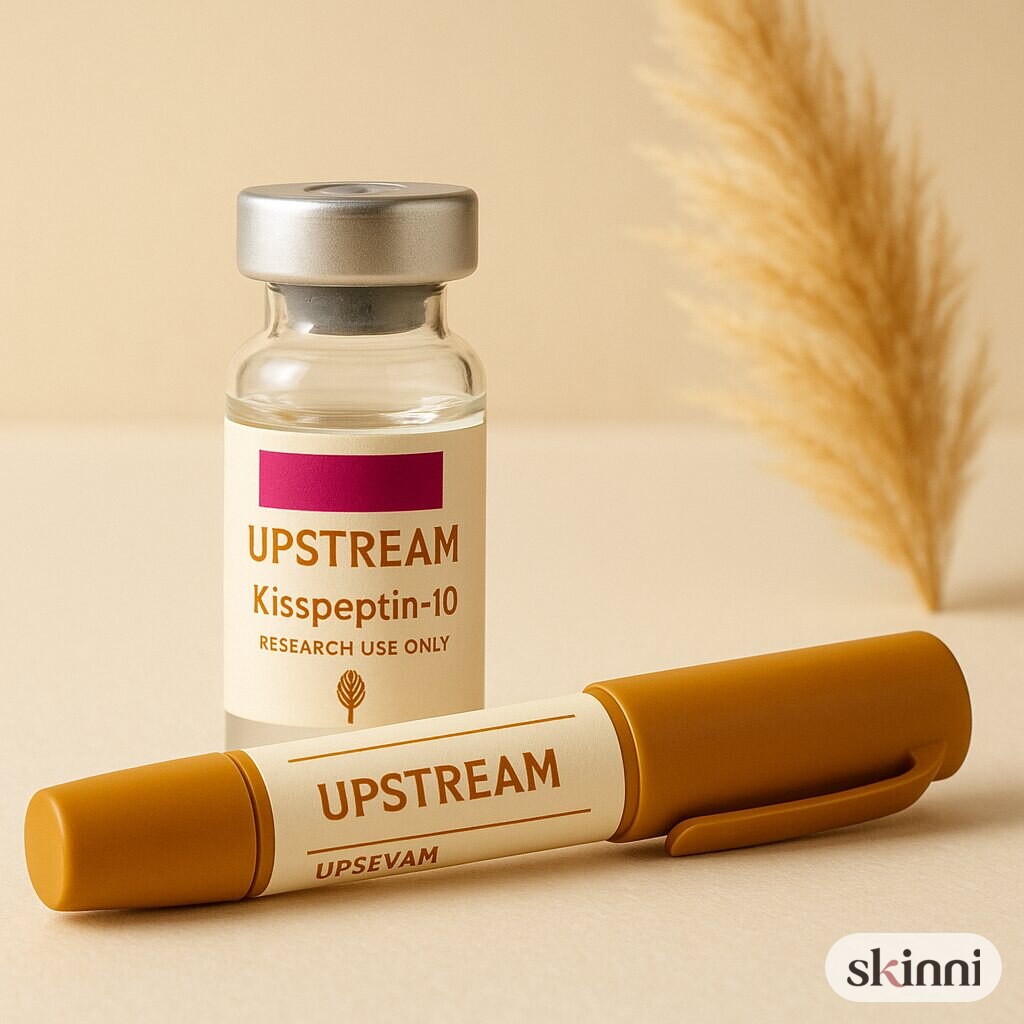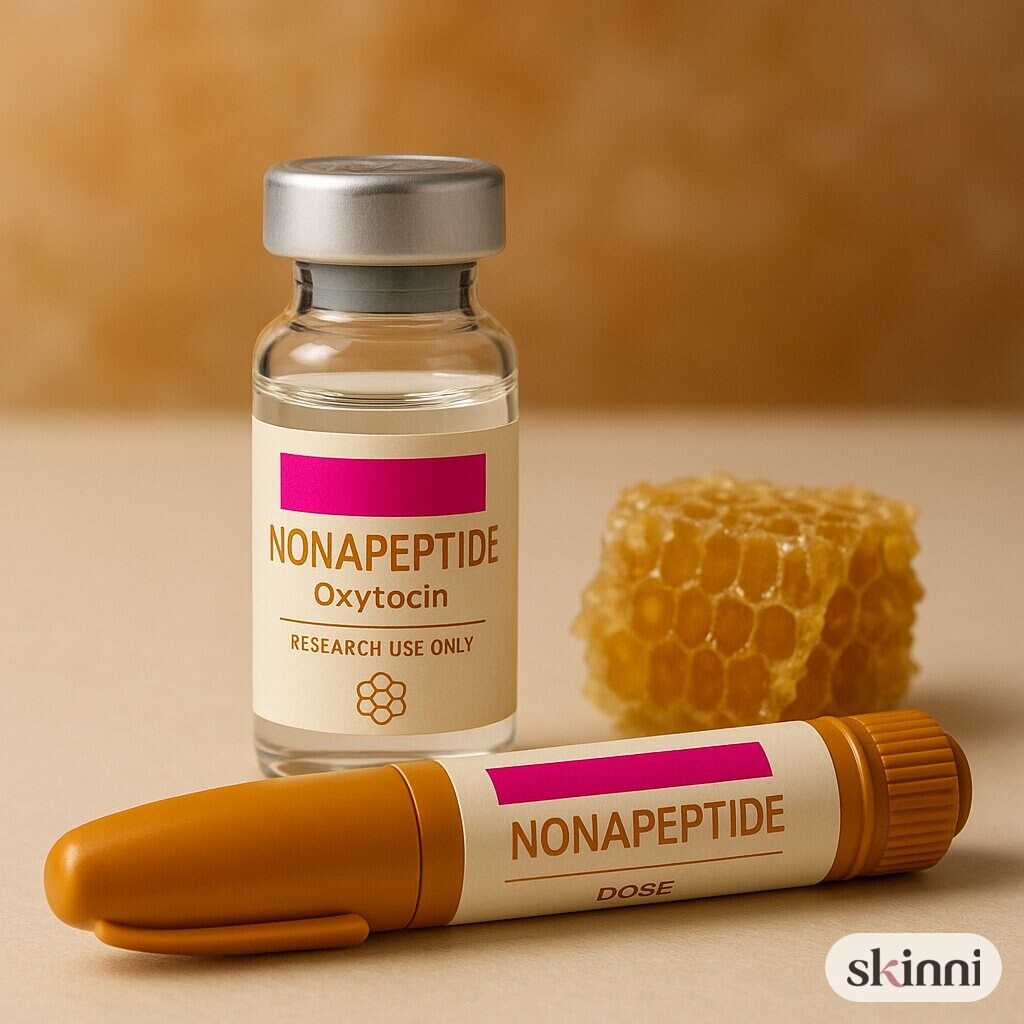
Two endocrine peptides, one discovered from the top of a pathway and one whose pathway keeps getting wider.
In short
- Kisspeptin signalling through the KISS1R receptor was identified as essential to reproductive development through loss-of-function mutations causing hypogonadotropic hypogonadism.
- Dhillo and colleagues reported in 2005 that kisspeptin administration in healthy men was followed by measurable rises in LH, FSH and testosterone.
- Kisspeptin-10 is the shortest C-terminal fragment retaining receptor activity; kisspeptin-54 is the longer form used in much of the human work.
- Oxytocin has been in clinical use for decades in obstetrics, and its central signalling literature is considerably less settled than popular accounts suggest.
Found from the top down
The hypothalamic-pituitary-gonadal axis was, for a long time, understood to begin with GnRH. Kisspeptin changed the starting point. The gene KISS1 and its receptor KISS1R were connected to reproduction through human genetics: individuals with loss-of-function mutations in the receptor presented with hypogonadotropic hypogonadism and failure to enter puberty, which placed the signal upstream of GnRH release rather than parallel to it.
That is an unusually clean route to a mechanism — a human phenotype pointing directly at a required node. Kisspeptin neurons in the arcuate nucleus are now understood as a principal input regulating GnRH pulse generation, and as a site where metabolic and steroid-feedback signals converge on the reproductive axis.
The human administration study
Dhillo and colleagues reported in the Journal of Clinical Endocrinology and Metabolism in 2005 that kisspeptin-54 administration in healthy male volunteers was followed by rises in luteinising hormone, follicle-stimulating hormone and testosterone relative to control, establishing that the pathway is pharmacologically addressable in humans and not only in animal models.
Subsequent clinical research has used kisspeptin analogues as a diagnostic probe of hypothalamic function — a test of whether the GnRH pulse generator responds — and in reproductive-medicine contexts including trigger protocols in assisted reproduction. Kisspeptin-10, the C-terminal decapeptide in the catalog, is the shortest fragment retaining receptor activity and has a shorter circulating half-life than the 54-residue form used in much of the human work, which is a difference worth holding when reading across the literature.
Oxytocin, and the limits of a familiar name
Oxytocin is the counter-example in this article. A nine-residue posterior-pituitary hormone, synthesised as one of the first peptide hormones ever made chemically, in routine obstetric use for labour induction and postpartum haemorrhage for decades. Its peripheral pharmacology is about as well established as peptide pharmacology gets.
Its central pharmacology is not. The large literature on oxytocin and social behaviour has a well-documented replication problem, complicated by real methodological difficulties: intranasal administration has uncertain central penetration, assay methods for endogenous oxytocin have been criticised, effect sizes in behavioural studies have shrunk as trials grew, and receptor cross-reactivity with the vasopressin system muddies interpretation.
Both halves of that are worth stating. A compound can be an approved drug with an unambiguous clinical indication and simultaneously have a contested research literature in a different domain, and it is the contested half that generates most of the popular writing about it.
In the catalog
Both compounds sit in the Endocrine world with research targets named at the level the literature supports — HPG-axis signalling and gonadotropin response for kisspeptin-10, receptor pharmacology and peripheral signalling for oxytocin.
Oxytocin's approved obstetric use is a clinical fact about a prescription medicine supplied through medical channels; it is not what the material in this catalog is supplied for, and nothing here should be read as bearing on clinical practice. No page carries dosing.
References
- Dhillo WS, Chaudhri OB, Patterson M, et al.. Kisspeptin-54 stimulates the hypothalamic-pituitary gonadal axis in human males. Journal of Clinical Endocrinology & Metabolism. 2005;90(12):6609–6615.
What this article is, and is not
This is a summary of published research, written for qualified professionals evaluating compounds for laboratory work. Every compound discussed is supplied by strictly for in-vitro and laboratory research use. None is a drug, a dietary supplement, or a cosmetic; none is intended for human or veterinary use; and nothing above is medical advice, a treatment recommendation, or a claim that any compound produces any effect in a person. We publish no dosing or administration guidance of any kind.