What the wound-model literature examined, in which animals, and where the human evidence stops.
In short
- Thymosin beta-4 has a defined biochemical function: it binds and sequesters monomeric actin, which links it directly to cytoskeletal reorganisation and cell motility.
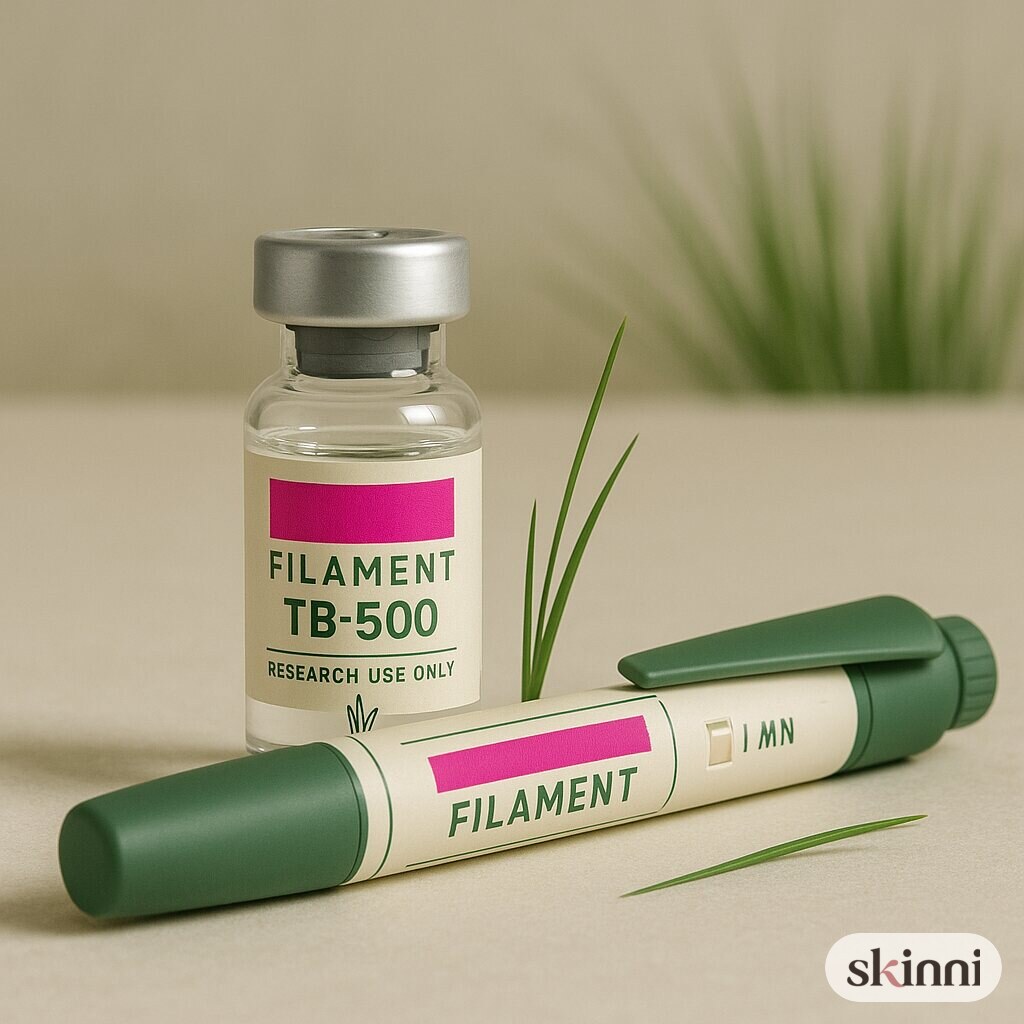
- TB-500 is a fragment corresponding to the actin-binding region, and is a different molecule from full-length thymosin beta-4.
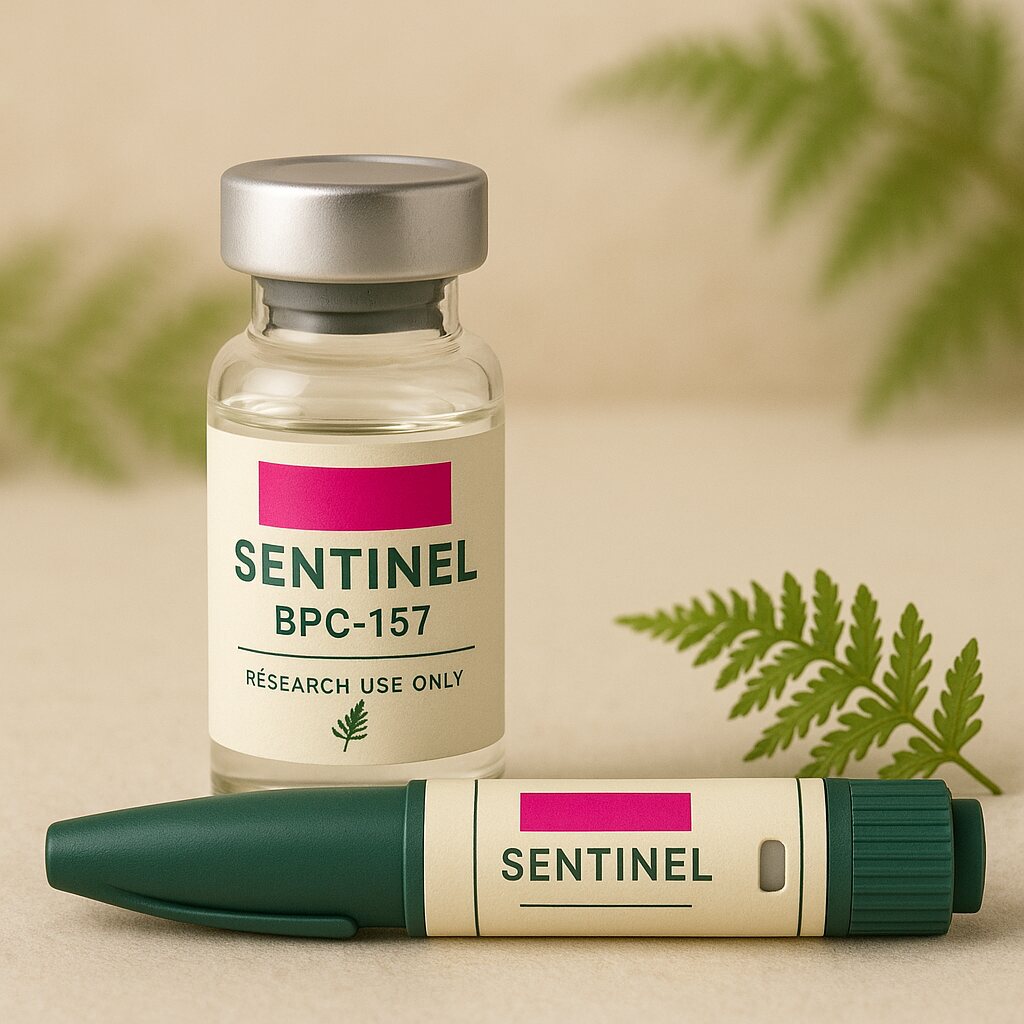
- BPC-157's mechanistic account is less resolved; published work centres on nitric-oxide system interaction and angiogenic signalling in rodent injury models.
- Almost the entire repair literature for both sits in rodents and cell culture. Controlled human efficacy trials are essentially absent.
An actin-sequestering protein with a second job
Thymosin beta-4 is a 43-residue peptide, abundant intracellularly, whose primary described biochemical activity is binding monomeric G-actin and holding it out of the polymerising pool. That alone would make it a cytoskeletal regulator, since the availability of free actin monomer governs how fast a cell can build and dismantle filaments — and therefore how it crawls, extends, and closes a gap.
Goldstein, Hannappel and Kleinman set out the broader case in Trends in Molecular Medicine in 2005 under a title that captures the argument: an actin-sequestering protein moonlighting to repair injured tissue. Alongside the cytoskeletal role they collate reports of effects on cell migration, angiogenic signalling and inflammatory mediators in injury models.
Philp and Kleinman later summarised the animal work specifically, in the Annals of the New York Academy of Sciences in 2010 — dermal, corneal and cardiac injury models across several species, with endpoints including wound closure rate and vessel density.
The fragment is not the parent
TB-500 as supplied in this field is a short sequence corresponding to the actin-binding region of thymosin beta-4, not the full-length 43-residue peptide. The rationale offered is that the fragment retains the actin interaction while being far simpler to synthesise.
That rationale is plausible and also largely untested at the level of equivalence. The great majority of the published work above was performed with full-length thymosin beta-4. Treating results from one as results for the other is a substitution the literature does not license, and it is a distinction worth holding when reading any summary that uses the two names interchangeably.
BPC-157, and a less settled mechanism
BPC-157 is a fifteen-residue sequence derived from a region of human gastric juice protein BPC. Its research record is unusual in shape: a large volume of rodent work, concentrated in a small number of laboratories, across an unusually wide range of injury models — gastrointestinal lesion, tendon and ligament transection, muscle crush, fistula, nerve injury.
Sikiric and colleagues, reviewing wound healing work in Frontiers in Pharmacology in 2021, frame the mechanistic account around interaction with the nitric-oxide system and around angiogenic and growth-factor signalling, with reported effects on vessel formation in the models used. The breadth is simultaneously the most striking feature of the record and the main reason for caution: a compound reported active across many unrelated injury types either engages something very upstream, or is being measured in a way that flatters it.
The honest position is that the mechanism remains less resolved than for thymosin beta-4, and that independent replication outside the originating groups is thinner than the volume of publications suggests.
Where the evidence stops
For both compounds the human record is the limiting factor. There is no adequately powered controlled human efficacy trial establishing a repair outcome for either. Early-phase human work exists in places, and full-length thymosin beta-4 has been through clinical evaluation in specific indications, but that is a narrower statement than the one usually made on its behalf.
Both also carry regulatory status worth knowing: BPC-157 is prohibited in sport under the World Anti-Doping Agency code, and thymosin beta-4 likewise falls under the prohibited peptide categories. Neither is an approved drug in the United States.
Which is why the catalog pages for these compounds name research targets — vessel formation in injury models, actin dynamics, tendon repair in rodents — and stop there.
References
- Goldstein AL, Hannappel E, Kleinman HK. Thymosin beta4: actin-sequestering protein moonlights to repair injured tissues. Trends in Molecular Medicine. 2005;11(9):421–429.
- Philp D, Kleinman HK. Animal studies with thymosin beta-4, a multifunctional tissue repair and regeneration peptide. Annals of the New York Academy of Sciences. 2010;1194.
- Sikiric P, Rucman R, Turkovic B, et al.. Stable Gastric Pentadecapeptide BPC 157 and Wound Healing. Frontiers in Pharmacology. 2021;12:627533.
What this article is, and is not
This is a summary of published research, written for qualified professionals evaluating compounds for laboratory work. Every compound discussed is supplied by strictly for in-vitro and laboratory research use. None is a drug, a dietary supplement, or a cosmetic; none is intended for human or veterinary use; and nothing above is medical advice, a treatment recommendation, or a claim that any compound produces any effect in a person. We publish no dosing or administration guidance of any kind.